


Geography
At Dunottar, the Geography Department aims to offer every pupil the opportunity to develop a truly enquiring mind, questioning the world around them and looking at how interrelationships between the physical and human world are entwined. Our curriculum, throughout the school, is designed to bring the awe and wonder of Geography into the classroom, through use of multimedia resources and a wide range of teaching strategies, covering a range of geographical topics across the contrasting countries from all corners of the globe. Skills development is vital within geography and we focus not only on map skills, data representation and interpretation skills, but also aim to develop soft skills through offering ranges of activities which support skills in team work, presentation, communication, problem solving and leadership. This provides opportunities for pupils to demonstrate the seven Warrior Learner behaviours on which our Teaching & Learning strategy is based.
Topics
Topics are chosen to highlight the importance of the interrelationships, from our impact on ecosystems and biomes, at both local and international scale, to how our consumer choices can impact on other people’s lives through the study of globalisation. Sustainability and environmental themes run through all units, supporting the development of evaluative skills in terms of the costs and benefits of many of our human interactions, and the values attached to these. We explore location far away through the exciting topics such as Fantastic Places, the Amazon and China to the more local themes such as fracking in Horley and Leith Hill. Even closer to home, we investigate the woodland ecosystem at Dunottar School using our brand new outdoor classroom.
Trips and Excursions
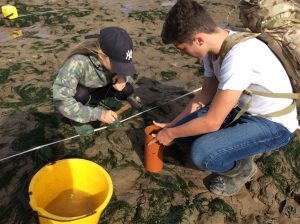
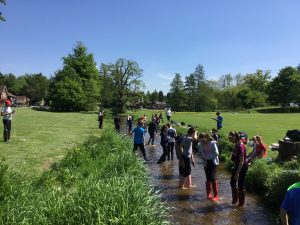
Exciting trips are also part of our offering with a regular trip to Iceland being offered along with residential trips to Suffolk, Dorset and the Isle of Wight for pupils to explore the world around them.
Developing Skills for Life
We aim to give our pupils the ability to ask questions, to identify and be able to explain patterns, to challenge ideas, evaluate and to have the tools to take the initiative to prove or disprove geographical theory. This helps support our pupils to develop all-round skills which will be essential in the world of work.